
Emergency Water Removal Minneapolis
Water doesn’t wait for business hours. Neither do we.
A burst pipe at 2 AM. A flooded basement during a spring thaw. A washing machine hose that gave out while you were at work. However, it happened, standing water spreads fast. Every hour it sits, the damage gets worse.
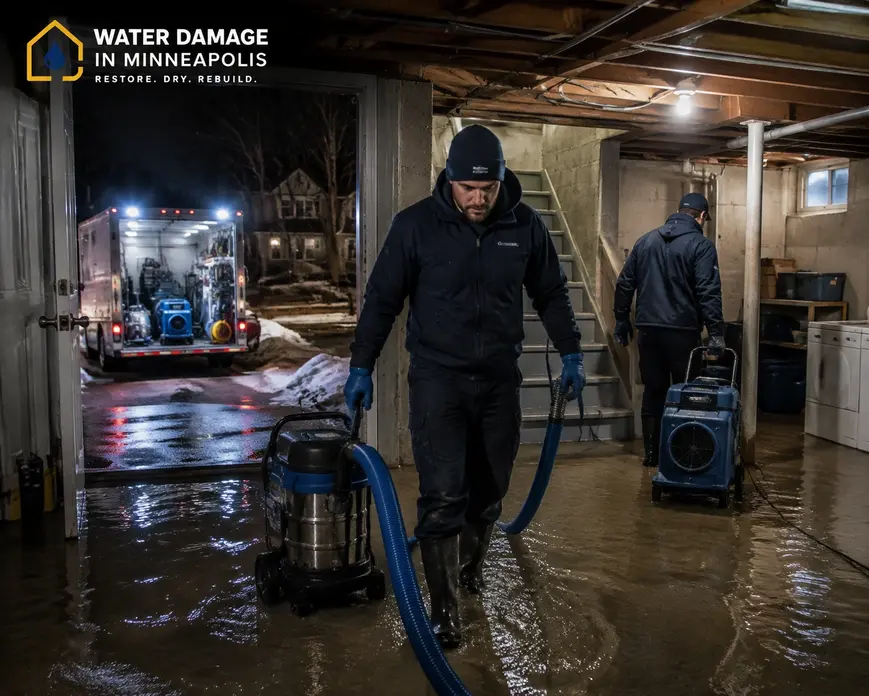
We’re a Minneapolis-based emergency water removal team. We answer the phone 24 hours a day, 7 days a week, including holidays. Most crews arrive within 60 minutes of your call.
Water Damage Emergency?
Call Now for Immediate Help
(612) 268-5222
24/7 • 60 Min Response Time
Why Every Minute Counts with Standing Water
Water damage isn’t just about what you can see.
Within the first few hours, water soaks into drywall, baseboards, and subfloors. By day two, wood starts to warp and swell. By day three, mold can begin growing in warm, damp areas often behind walls where you won’t notice it until it’s already spread.
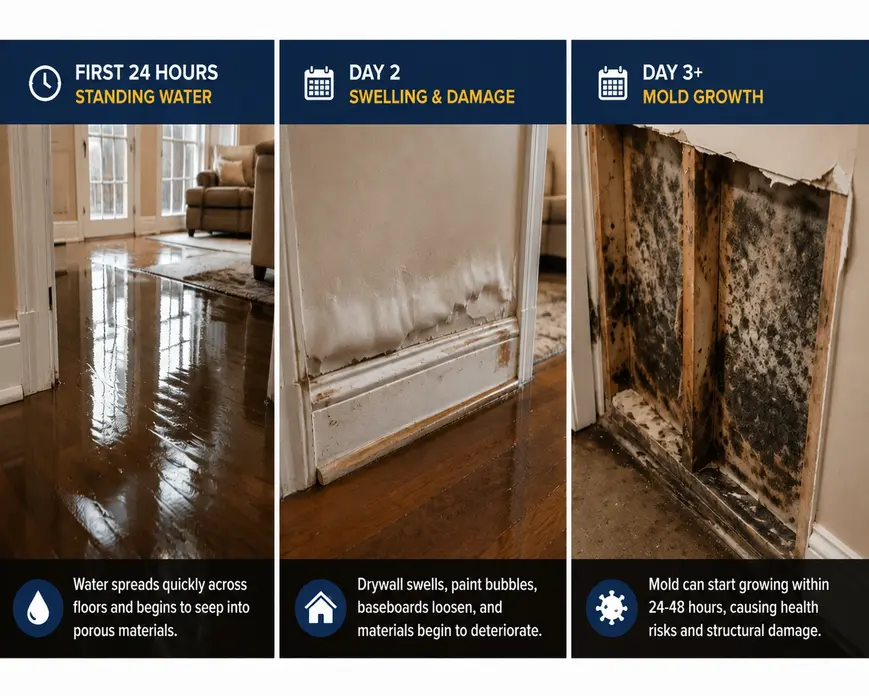
This is why we treat every call as urgent, not just the big ones.
What happens if you wait:
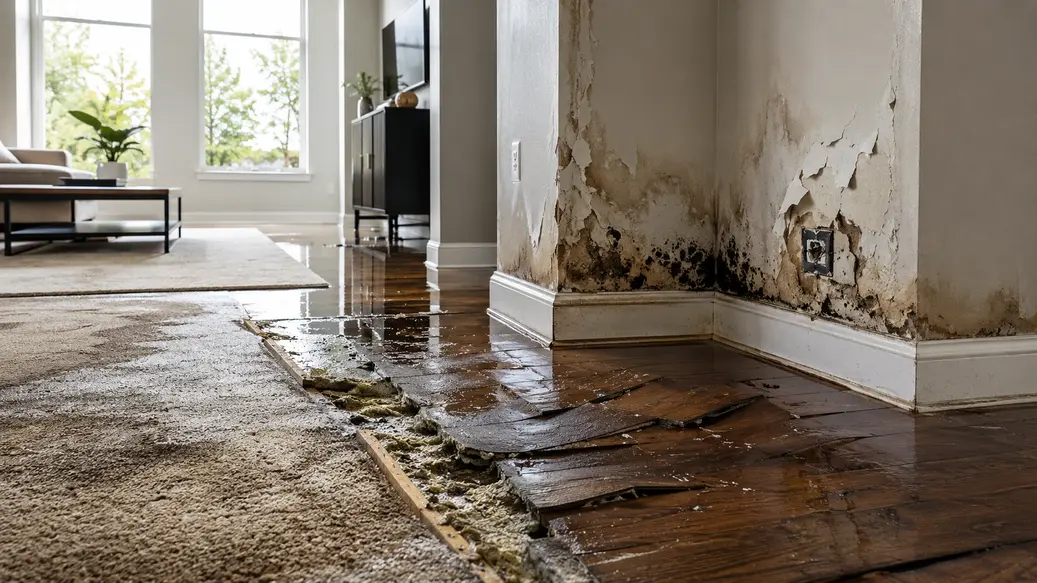
- Carpet padding and hardwood floors become unsalvageable
- Drywall absorbs moisture and starts to break down
- Electrical systems near water become a safety risk
- Mold growth begins, sometimes in as little as 24 to 48 hours
- Insurance claims get harder to support without early documentation
What To Do While You Wait For Us
Do This
- Shut off the water source if you know where it is (main valve, appliance valve, or fixture)
- Turn off electricity to the affected area at the breaker, if you can reach it safely
- Move furniture, rugs, and electronics away from standing water
- Take a few photos or a short video before you move anything, for insurance
- Prop up furniture legs on foil or blocks to stop staining
Don’t Do This
- Don’t use a household vacuum on standing water
- Don’t walk into a room with standing water if outlets or cords are submerged
- Don’t enter a flooded basement if you smell gas or hear buzzing from the electrical panel
- Don’t wait to see if it “dries on its own” it won’t, not evenly, and not without leaving problems behind
If the water is from a sewer backup or outside flooding, stay out of the area entirely and call us before doing anything else.
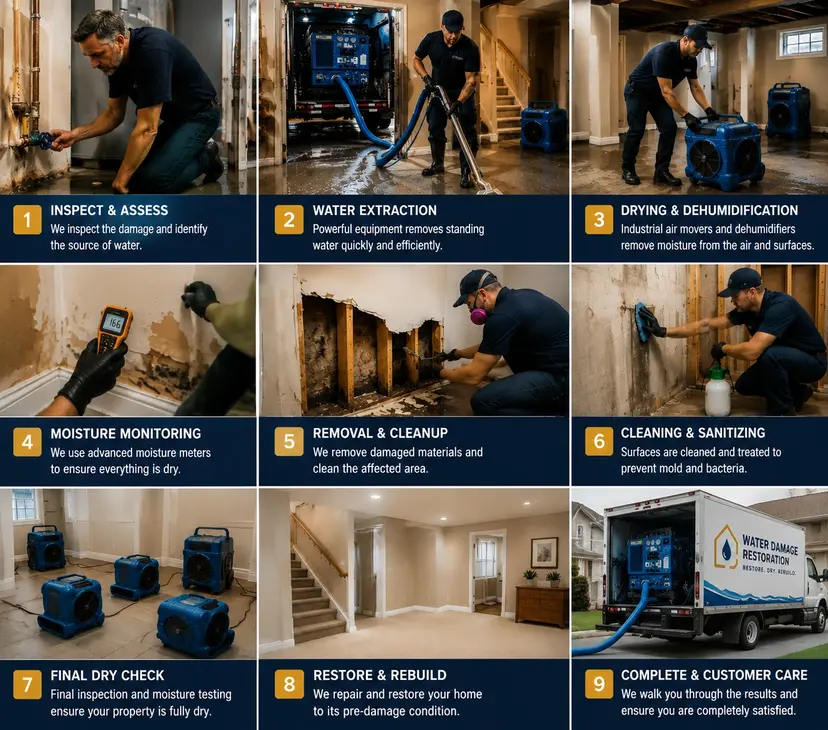
Our Emergency Water Removal Process:
We follow a clear process every time. No guesswork. No wasted time.
1. Emergency Call & Dispatch
Call us any time, day or night. We ask a few quick questions about the source and size of the water, then dispatch the nearest available crew.
2. On-Site Inspection
When we arrive, we identify the water source first. Stopping the source matters as much as removing the water, otherwise you’re bailing out a boat with a hole in it.
We also check for water categories, since this changes how we handle cleanup:
- Category 1: Clean water (supply lines, rain intrusion)
- Category 2: Grey water (appliance overflow, washing machine leaks)
- Category 3: Black water (sewage backup, flooding from outside)
3. Water Extraction
We use truck-mounted and portable extraction units to remove standing water from floors, carpets, and padding. For larger volumes, we bring submersible pumps.
4. Moisture Detection
Visible water is only part of the problem. We use moisture meters and thermal imaging to find water that’s traveled into walls, under flooring, or into insulation the water you can’t see is usually the water that causes mold later.
5. Drying & Dehumidification
Industrial air movers and dehumidifiers go to work immediately. We monitor moisture levels daily until the structure reads dry, not just “looks dry.”
6. Documentation for Insurance
We photograph and log every step moisture readings, affected materials, equipment used so you have a clear record if you’re filing a claim.
The Equipment Behind The Job
A shop vac and a few fans won’t dry out a flooded room. Here’s what we actually bring:
- Truck-mounted extractors: Pull large volumes of water fast, more powerful than portable units
- Submersible pumps: For standing water deeper than a few inches, like flooded basements
- LGR dehumidifiers: (Low-grain refrigerant) pull moisture out of the air faster than standard units, which matters in humid Minnesota summers
- Air movers: Placed strategically to speed up surface drying on floors and walls
- Thermal imaging cameras: spot temperature differences that indicate hidden moisture behind walls or under flooring
- Moisture meters: give us exact readings so we know when a material is actually dry, not just dry to the touch

What We Remove Water From
We handle emergency water removal for homes, apartments, condos, and commercial properties across Minneapolis.
Residential
- Flooded basements
- Kitchens and bathrooms
- Living rooms and bedrooms
- Crawl spaces
Commercial
- Offices and retail spaces
- Apartment buildings and condos
- Restaurants and hospitality properties
- Warehouses and light industrial
Multi-unit buildings need extra care, since water on one floor can travel into units below or beside it. We coordinate directly with property managers and tenants to make sure nothing gets missed.
Water Damage Emergency?
Call Now for Immediate Help
(612) 268-5222
24/7 • 60 Min Response Time
Common Causes of Emergency Water Damage in Minneapolis
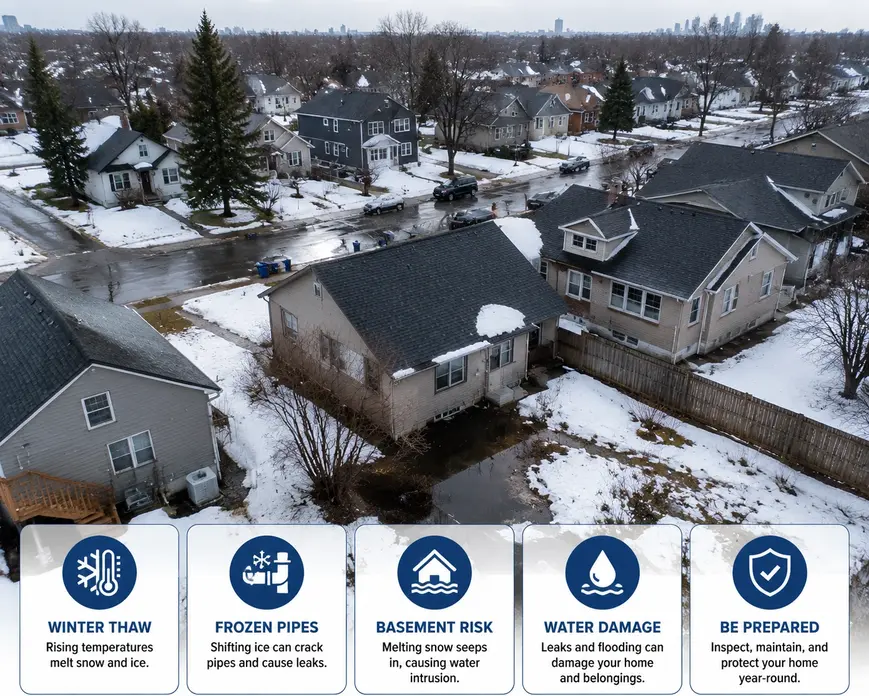
Minneapolis weather and housing stock create specific water damage patterns we see over and over:
- Frozen and burst pipes:Common in older homes during hard winter freezes
- Spring snowmelt: Thawing snow overwhelms basements and window wells
- Sump pump failure: Often during heavy storms, right when it’s needed most
- Sewer backups: Aging municipal infrastructure in parts of Minneapolis and St. Paul
- Appliance leaks: Water heaters, dishwashers, and washing machines
- Roof leaks: Ice dams in winter causing water to back up under shingles
Knowing the local causes helps us diagnose the source faster on arrival, which means less water damage overall.
We see these patterns repeat across specific parts of the metro. Older housing stock in neighborhoods like Linden Hills, Kenwood, and parts of St. Paul tends to have galvanized or cast-iron plumbing more prone to failure. Homes near the Mississippi River and lower-lying areas of Edina and Bloomington see more groundwater intrusion during spring melt. New-construction areas around Maple Grove and Plymouth deal less with pipe age, but more with sump pump failures during heavy summer storms.
If you’re not sure which category your home falls into, that’s fine, we’ll figure it out on-site. It just means we usually have a good idea of what we’re walking into before we even knock on the door.
Insurance Help, Handled Right
Most water damage claims come down to documentation.
We photograph the damage before we touch anything, track moisture readings throughout the drying process, and provide a detailed report you can hand directly to your adjuster.
A few things worth knowing:
- Sudden events like a burst pipe are typically covered
- Gradual leaks or outside flooding may be treated differently depending on your policy
- Filing early with photos and documentation strengthens your claim
- We can work directly with your insurance company if you’d prefer not to be the go-between
We’re not your insurance company, so we can’t guarantee coverage. What we can do is make sure the documentation is thorough enough that your claim isn’t slowed down by missing information.
Signs You Might Have Hidden Water Damage
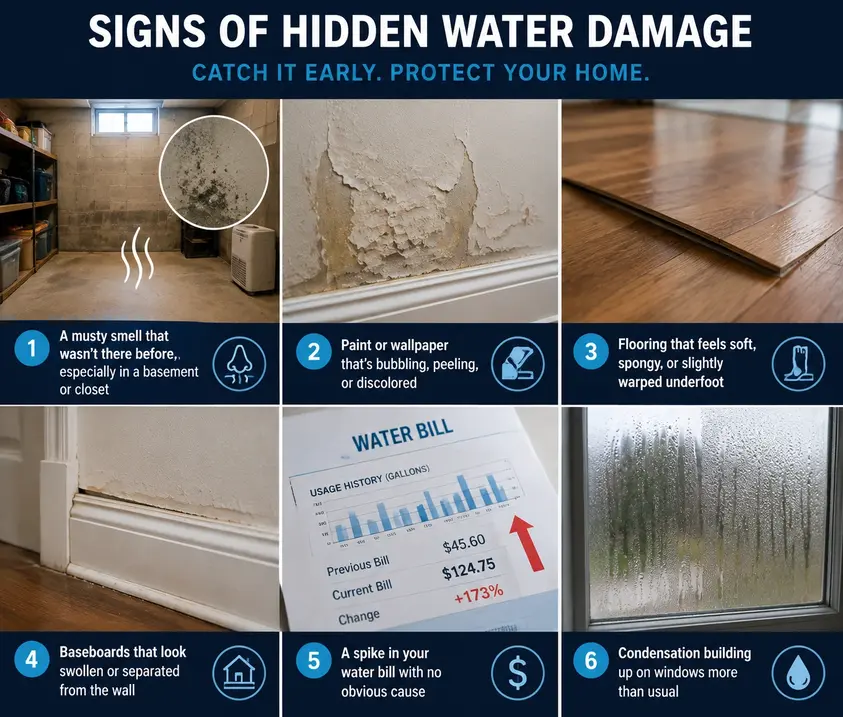
Sometimes the water you can see isn’t the problem. It’s the water you can’t.
Watch for:
- A musty smell that wasn’t there before, especially in a basement or closet
- Paint or wallpaper that’s bubbling, peeling, or discolored
- Flooring that feels soft, spongy, or slightly warped underfoot
- Baseboards that look swollen or separated from the wall
- A spike in your water bill with no obvious cause
- Condensation building up on windows more than usual
If any of these sound familiar, even without visible standing water, it’s worth having us take a look. Moisture meters and thermal cameras find what’s hiding waiting usually means finding out the hard way, with mold.
What Affects the Cost of Emergency Water Removal
Every job is different, so we don’t quote a flat rate without seeing the damage first. That said, a few things generally drive the cost:
- How much water, and how deep: A few inches in one room costs less than a fully flooded basement
- How long it’s been sitting: Water that’s had 24+ hours to soak in usually means more materials need to be removed, not just dried
- Water category: Clean water (Category 1) costs less to remediate than grey or black water, which need sanitizing
- What got wet: Hardwood floors, drywall, and insulation each need different handling
- Square footage affected: Larger areas need more equipment and more drying time
Most insurance policies cover sudden water damage like a burst pipe, which is why documentation matters so much from the first call. We’ll give you a clear, written estimate before any work beyond emergency extraction begins no surprise charges after the fact.
Why Minneapolis Homeowners Call Us First
- IICRC-certified technicians trained in water damage restoration standards
- 60-minute average response time, 24/7/365
- Locally based we know Minneapolis weather, housing stock, and common failure points
- Direct insurance coordination to reduce your back-and-forth
- Full-service we handle extraction, drying, and reconstruction, so you’re not managing multiple contractors
Water Damage Emergency?
Call Now for Immediate Help
(612) 268-5222
24/7 • 60 Min Response Time