Sewage Cleanup in Minneapolis
A sewage backup is a health hazard, not just a mess. We remove it safely, sanitize the space, and restore it 24/7.
A sewage backup is one of the most urgent and hazardous problems a property owner can face. Unlike a clean-water leak, sewage carries bacteria, viruses, and other contaminants which means it can’t be handled like an ordinary spill. It needs professional cleanup with the right protective equipment and disinfection.
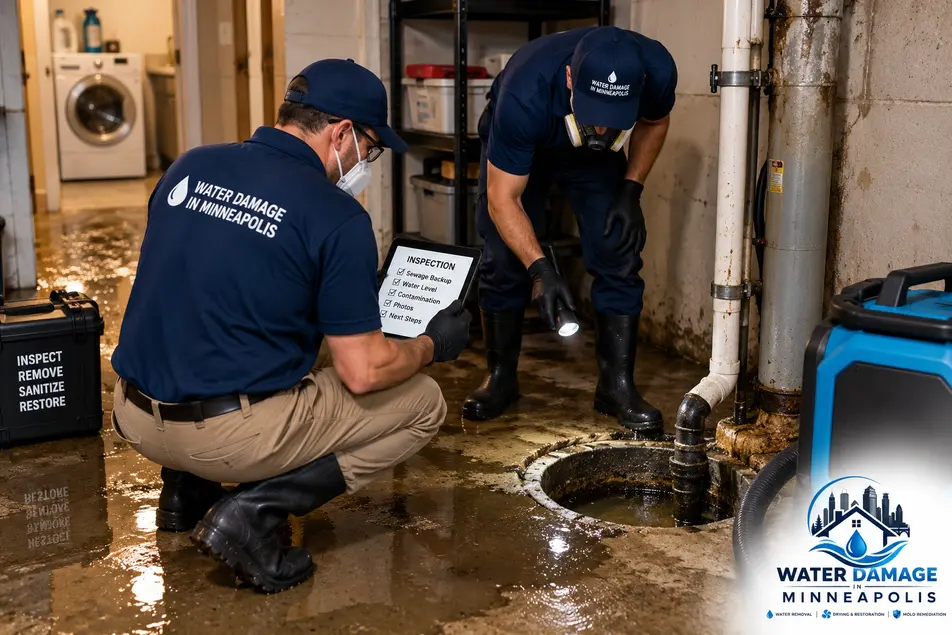
Water Damage in Minneapolis provides safe, thorough sewage cleanup across Minneapolis and the Twin Cities. Our IICRC-certified team contains the contamination, removes the sewage, disinfects and sanitizes every affected surface, and dries the structure restoring your space to a safe, sanitary condition.
If you have a sewage backup right now, stay out of the affected area and call us. This is not a cleanup to attempt yourself.
Why Minneapolis Home Owner Call Us
✅Same-day mold remediation across Minneapolis
✅ 24/7 emergency response / 60-minute average arrival
✅ IICRC-certified technicians
✅ We remove the mold AND fix the water source behind it
✅ Insurance claim documentation on every job
Emergency Help
+1 (507) 410-9911
24/7 • 60 Min Response Time
Why Sewage Backup Cleanup Isn’t a DIY Job
It’s tempting to grab a mop and clean up a sewage backup yourself. Here’s why that’s a serious mistake and why this specific type of water damage requires professional handling.
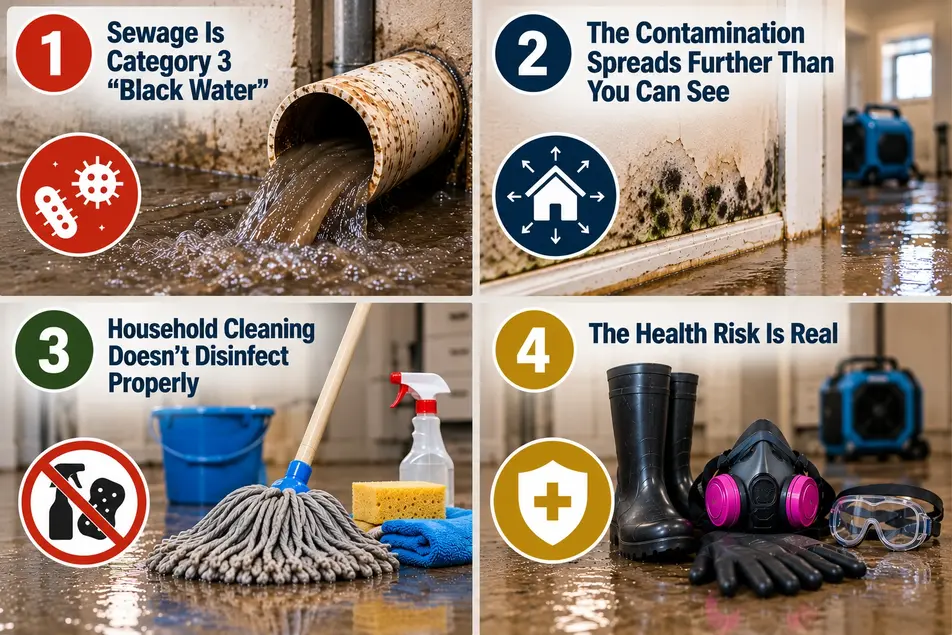
1. Sewage Is Category 3 “Black Water”
In the restoration industry, water is classified by how contaminated it is. Sewage falls into Category 3 black water, the most hazardous class. It can contain harmful bacteria, viruses, parasites, and other pathogens that pose real health risks through contact, contaminated surfaces, and the air.
This classification isn’t a technicality it dictates everything about how the cleanup has to be done, from protective equipment to which materials can be saved and which must be removed.
2. The Contamination Spreads Further Than You Can See
Sewage water soaks into porous materials carpet, padding, drywall, insulation and carries contamination with it. It also releases contaminants into the air, which is why running your HVAC system during a backup can spread the problem through the whole building. What looks like a contained spill is often a much larger contamination zone.
3. Household Cleaning Doesn’t Disinfect Properly
Mops, household cleaners, and standard wet-vacs aren’t built for biohazard cleanup. They can’t safely extract contaminated water or disinfect at the level sewage requires and using them often spreads contamination rather than removing it. Proper sewage backup cleanup uses dedicated equipment, professional-grade disinfectants, and containment protocols.
4. The Health Risk Is Real
Exposure to sewage can cause illness through skin contact, inhalation, or contaminated surfaces. This is why we treat every sewage backup as a biohazard event protecting your household, your property, and our technicians throughout the process.
+1 (507) 410-9911
Call For Mold Remediation in Minneapolis
What Causes Sewage Backups in Minneapolis?
Sewage backups happen for a handful of common reasons, several of them tied to Minneapolis’s older infrastructure and seasonal weather. Knowing the cause helps you understand the risk and whether it’s likely to happen again.
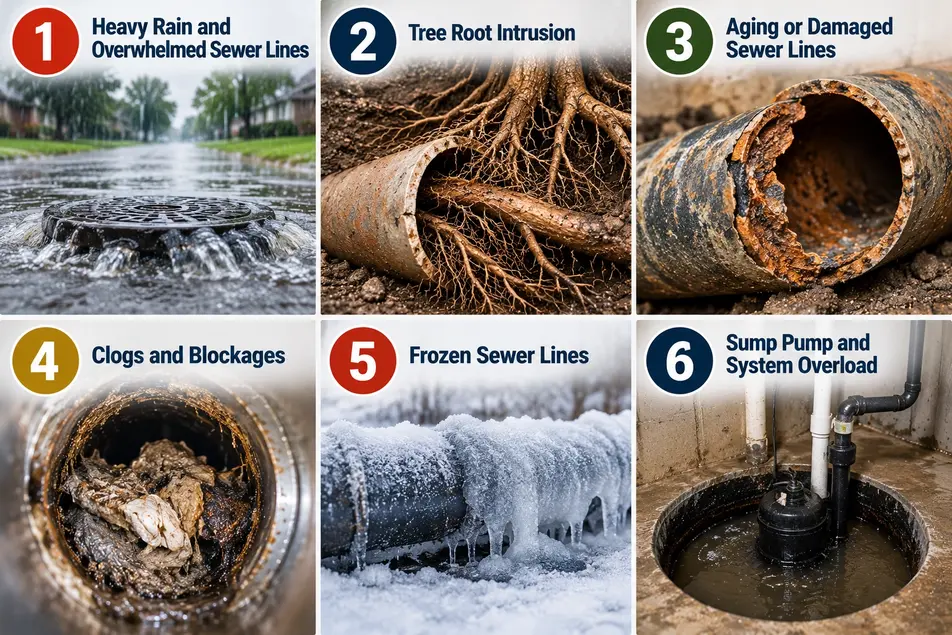
1. Heavy Rain and Overwhelmed Sewer Lines
When heavy rain or rapid snowmelt overwhelms the municipal sewer system, water can back up into homes through basement floor drains and lower level fixtures. This is one of the most common causes in Minneapolis, especially during spring thaw and summer storm season.
2. Tree Root Intrusion
Tree roots naturally seek out moisture and can grow into aging sewer lines, cracking them and creating blockages. This is especially common with the mature trees and older sewer lines found throughout many established Minneapolis neighborhoods.
3. Aging or Damaged Sewer Lines
Many Minneapolis homes have decades-old sewer lines that have corroded, cracked, sagged, or partially collapsed over time. As these lines deteriorate, blockages and backups become more likely.
4. Clogs and Blockages
A buildup of grease, debris, flushed items that shouldn’t be, or other obstructions can block a main line and force sewage back into the home through the lowest drains.
5. Frozen Sewer Lines
During Minnesota’s deep-freeze stretches, sewer lines can freeze, blocking flow and causing backups until they thaw a distinctly local, cold-weather cause.
6. Sump Pump and System Overload
When a sump pump fails or the system is overwhelmed during heavy water events, the combination can contribute to water and sewage backing up into the lowest level of the home.
Our Sewage Cleanup Process in Minneapolis
Sewage cleanup has to be done in a specific order to keep contamination contained and the space genuinely safe afterward. Our IICRC-certified team follows industry safety protocols at every step.
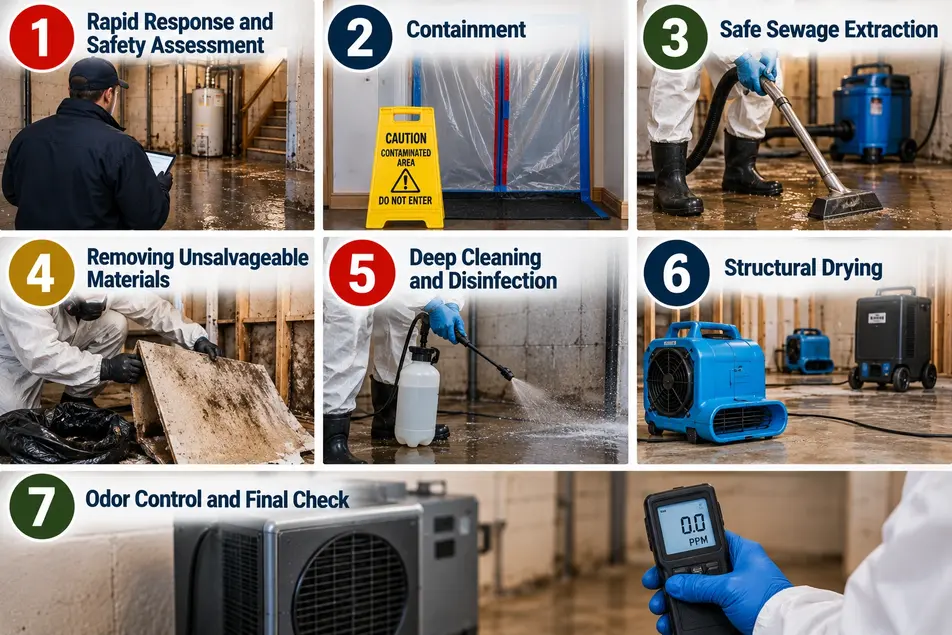
Step 1. Rapid Response and Safety Assessment
The moment you call +1 (507) 410-9911, we dispatch a team 24/7, with a 60-minute average response time. On arrival, we assess the source and extent of the contamination and identify any immediate safety concerns, including electrical hazards near the water.
Step 2. Containment
Before cleanup begins, we contain the affected area to prevent contamination from spreading to clean parts of your home. This includes sealing off the space and shutting down HVAC where needed, so contaminated air isn’t circulated through the building.
Step 3. Safe Sewage Extraction
Using equipment dedicated to contaminated-water removal, we handle the sewage removal and extract the standing water. Our technicians wear proper protective equipment throughout, handling the biohazard safely rather than with standard cleanup tools.
Step 4. Removing Unsalvageable Materials
Porous materials that sewage has saturated carpet, padding, drywall, insulation usually can’t be safely disinfected and are removed and disposed of properly. This is a necessary step: leaving contaminated porous materials behind means leaving the health hazard behind. We document everything removed for your insurance claim.
Step 5. Deep Cleaning and Disinfection
We clean and disinfect all affected hard surfaces, framing, and structural materials with professional-grade disinfectants sanitizing the space to safe, healthy standards rather than just rinsing it.
Step 6. Structural Drying
Once the area is clean and disinfected, we dry the structure completely using commercial-grade air movers and dehumidifiers, monitoring moisture until it reaches verified dry standards. Thorough drying is what prevents mold from following the backup.
Step 7. Odor Control and Final Check
We apply antimicrobial treatment and address any lingering odor, then confirm the space is clean, dry, and sanitary. Before we finish, we walk you through the work and provide documentation photos and scope for your insurance claim.
Call +1 (507) 410-9911
Start Your Sewage Cleanup
What to Do (and Not Do) During a Sewage Backup
| DO ✅ | DON’T ❌ |
|---|---|
| Keep everyone, especially children and pets, out of the affected area. | Don’t attempt to clean sewage yourself with mops, towels, household cleaners, or a wet-vac. |
| Shut off the HVAC if it is safe to reach to help prevent contaminated air from circulating. | Don’t walk through sewage water or track contamination into clean areas. |
| Stop using water in the home, including toilets, sinks, and fixtures connected to the affected line. | Don’t run the HVAC if it could circulate contaminated air through the building. |
| Document the damage with photos and videos, but only if you can do so safely without contact. | Don’t use affected drains or fixtures until the sewage backup has been resolved. |
| Call for professional sewage cleanup immediately at +1 (507) 410-9911. | Don’t try to save heavily contaminated porous materials such as soaked carpet or drywall without professional assessment. |
Why Minneapolis Trusts Us for Sewage Cleanup
A sewage backup is a health hazard you want a team that handles it safely, thoroughly, and fast, not one that treats it like an ordinary spill.
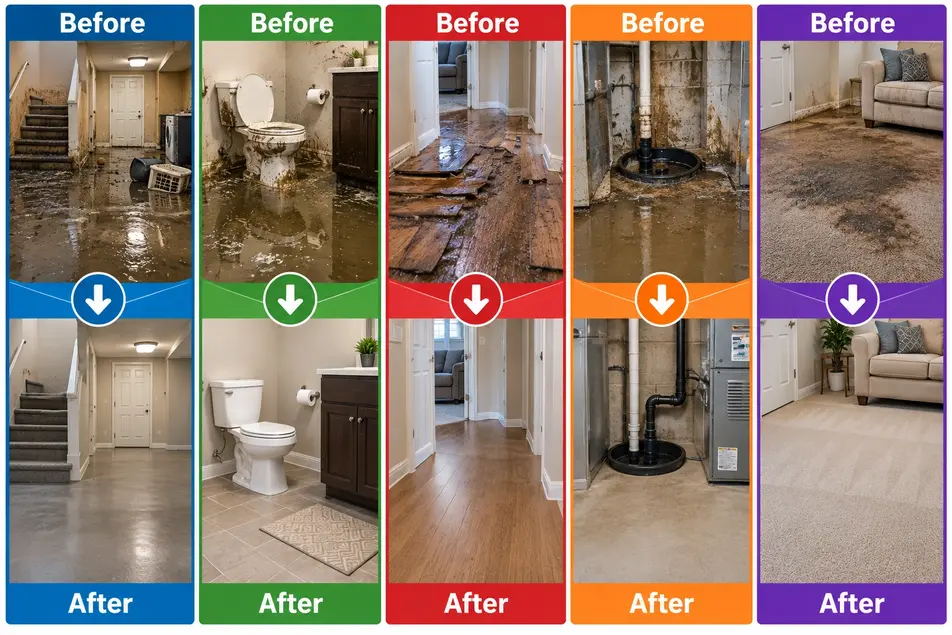
1. Safe, Certified Biohazard Handling
Our team is IICRC-certified and follows established safety protocols for contaminated-water cleanup proper protective equipment, containment, professional disinfection, and safe disposal of contaminated materials. Sewage is handled as the biohazard it is, protecting your household and our crew.
2. Same Day Response (24/7)
Sewage contamination gets worse and more hazardous the longer it sits. We’re available 24/7 with a 60-minute average response time across Minneapolis and the Twin Cities, so cleanup starts as fast as possible.
3. We Handle the Whole Job
We don’t just remove the sewage we disinfect the affected areas, control odors, and complete thorough structural drying. If contamination has already led to mold growth, our in-house mold remediation service addresses it as part of one coordinated cleanup and restoration process.
4. Local and Reliable
We’re based right here in the Twin Cities not a national call center. The team that answers your call is the team that shows up, and we know the local sewer issues, older infrastructure, and seasonal causes behind Minneapolis backups.
5. We Document for Your Insurance
Throughout the emergency water removal process, from the initial assessment through final sanitizing, we document everything including photos, affected materials, and the complete scope of wor so your insurance company has what it needs to evaluate your claim.
6. Honest, Respectful Service
A sewage backup is stressful and unpleasant. We handle it professionally and respectfully, explain what we’re doing and why, and restore your space to a safe, sanitary condition.
Get Safe Sewage Cleanup in Minneapolis
- Sewage backups are a serious health hazard and become more dangerous the longer they sit.
- Avoid DIY cleanup that could spread contamination or expose your family to harmful bacteria.
- Water Damage in Minneapolis provides 24/7 professional sewage cleanup.
- Our IICRC-certified local team safely contains and removes sewage contamination.
- We sanitize and disinfect the affected areas thoroughly.
- We dry the space completely to help prevent further damage.
- Our goal is to restore your home to a safe, clean, and healthy condition.
- Call Now: +1 (507) 410-9911