Structural Drying in Minneapolis
Pumping out the water is the easy part. Drying a structure so completely that mold and warping never appear is the science and it’s what we do.
Here’s what most people don’t realize about water damage: the standing water you can see does far less long-term harm than the moisture you can’t. After the visible water is gone, moisture stays behind deep in subfloors, inside wall cavities, soaked into framing and insulation quietly warping materials and feeding mold for weeks. Structural drying is the stage that removes that hidden moisture completely, and it’s the difference between a home that recovers and one that develops problems months later.
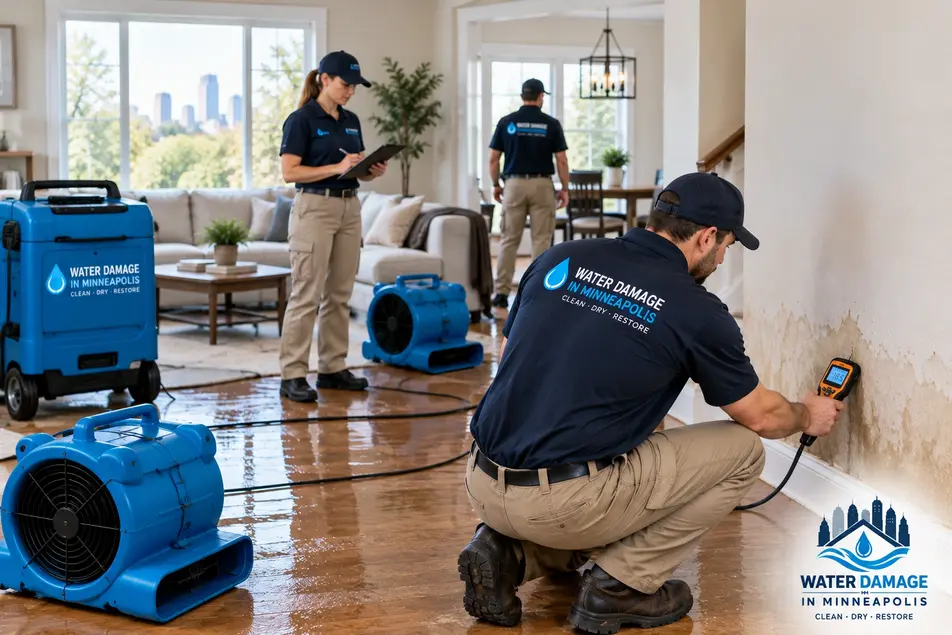
Water Damage in Minneapolis provides professional structural drying across Minneapolis and the Twin Cities. Our IICRC-certified team uses commercial-grade equipment and moisture science to dry your property from the inside out and we prove it’s dry with documented moisture readings, not a hand on the surface. If your property has had water damage, this is the step that protects it for the long run.
What sets our drying apart
✅Hidden-moisture detection with meters and infrared cameras
✅ Commercial-grade air movers and dehumidifiers
✅ Drying to verified, documented dry standards
✅ 24/7 response, 60-minute average arrival
✅ IICRC-certified technicians
Request Inspection
+1 (507) 410-9911
24/7 • 60 Min Response Time
The Science of Drying: Why It’s More Than Fans
Structural drying looks simple from the outside set up some equipment, wait a few days. In reality, it’s a controlled process that balances four factors, and getting the balance wrong leaves moisture behind. Understanding it explains why professional drying works and box fans don’t.
1. It’s a Balance of Four Things
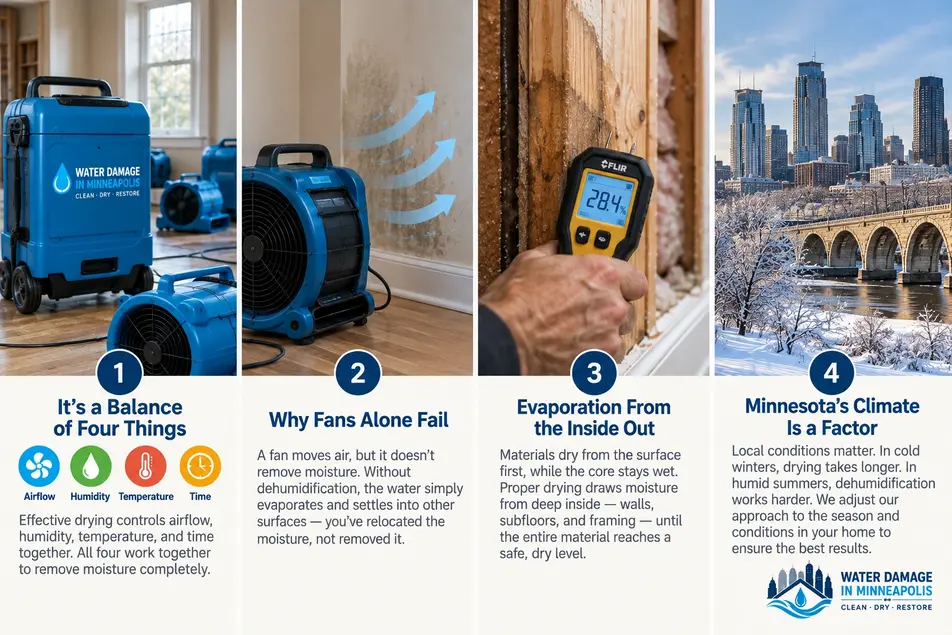
Effective drying comes down to controlling airflow, humidity, temperature, and time together. Air movers speed evaporation off wet surfaces, dehumidifiers pull that evaporated moisture out of the air before it can resettle, temperature affects how fast evaporation happens, and time ties it all together. Change one without the others and drying stalls which is exactly what happens when someone points a household fan at a wet floor and hopes.
2. Why Fans Alone Fail
A fan moves air, but it does nothing to remove moisture from that air. Without dehumidification, the water simply evaporates off one surface and soaks into another you’ve relocated the moisture, not removed it. Worse, adding humidity to the air without removing it can spread the problem to previously dry materials. Professional drying pairs airflow with dehumidification so the moisture actually leaves your home.
3. Evaporation From the Inside Out
Materials release moisture from the surface first, while the core stays wet. That’s why a floor can feel dry on top and still hold enough moisture underneath to warp or grow mold. Proper drying draws moisture out of the depth of the material sometimes with specialized methods that dry wall cavities and subfloors directly until the whole material, not just its surface, reaches a safe level.
4. Minnesota’s Climate Is a Factor
Local conditions matter. In a Minnesota winter, indoor air is often very dry, which can help but cold slows evaporation, so drying has to be managed, not assumed. In humid summer stretches, dehumidification has to work harder against the ambient moisture. We adjust the approach to the season and the conditions in your home.
Why “Dry to the Touch” Isn’t Actually Dry
The single most common water-damage mistake is stopping too early calling a job done because the surfaces feel dry. That gap between surface-dry and genuinely dry is where most delayed damage begins.
1. Moisture Hides Where You Can’t See It
When water damage happens, moisture wicks into drywall, soaks into subflooring, climbs wall cavities, and settles into insulation and framing. You can wipe the floor completely dry and still have saturated materials inside the walls and beneath your feet with no visible sign anything is wrong.
2. Hidden Moisture Causes Delayed Damage
Left behind, trapped moisture keeps working long after the visible water is gone:
- Drywall stays damp behind the paint and grows mold
- Subfloors and framing weaken over time
- Musty odors develop and linger
- Mold takes hold often weeks after the original water event
- Hardwood floors cup, crown, or buckle
The Only Way to Know Is to Measure
You cannot tell a structure is truly dry by touch or sight. The only reliable way is to measure moisture inside the materials and compare it against the safe dry standard for each one. That’s the core of professional structural drying and it’s why we measure, monitor, and dry until the readings confirm it, rather than stopping when a surface feels dry.
What We Dry in Minneapolis Properties
Different materials hold and release water differently, and each needs the right approach. We dry the full range found in Minneapolis homes and businesses.
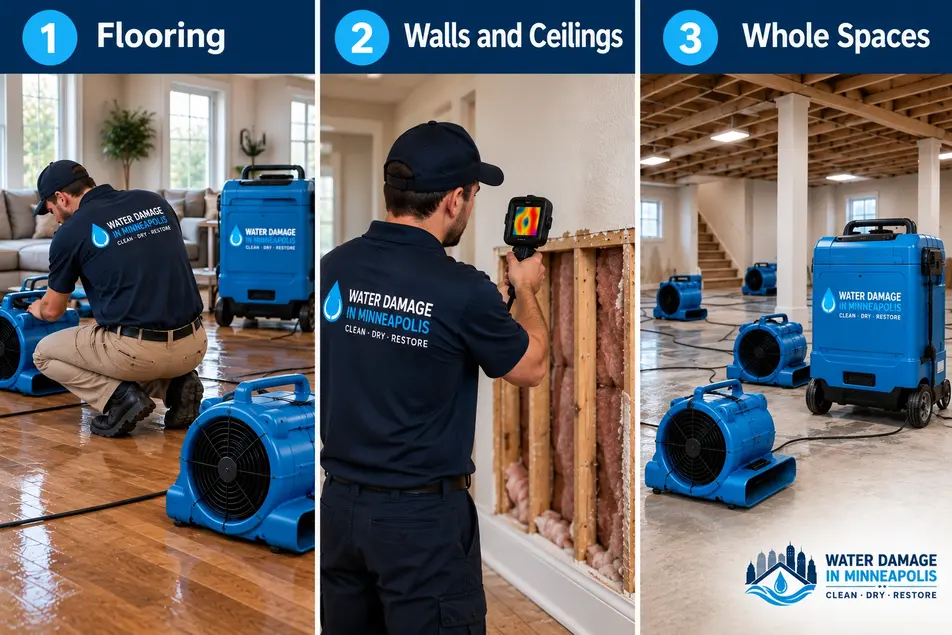
Flooring:
- Hardwood: Dried with specialized systems that draw moisture from below, preventing cupping, crowning, and buckling.
- Carpet and padding: Dried in place where salvageable; saturated padding is often replaced
- Tile and laminate: Water travels underneath, so we dry the subfloor, not just the surface
- Subflooring: Dried and verified before any new flooring goes down
Walls and Ceilings:
- Drywall: Dried in place when caught early; wall-cavity drying reaches moisture behind the surface
- Insulation: Saturated insulation often can’t be saved and is removed so the wall can dry
- Framing: Dried to safe moisture levels to protect the structure
- Ceilings: Dried thoroughly when water has traveled down from an upper floor
Whole Spaces:
- Basements: The highest-moisture, highest mold risk space in most homes, drying is critical here
- Crawl spaces: Enclosed and slow to dry without proper equipment
- Commercial spaces: Dried with minimal disruption to your operations
Our Structural Drying Process in Minneapolis
Structural drying is measured and monitored not set-and-forget. Our IICRC-certified team follows a method built to dry your property completely and prove it.
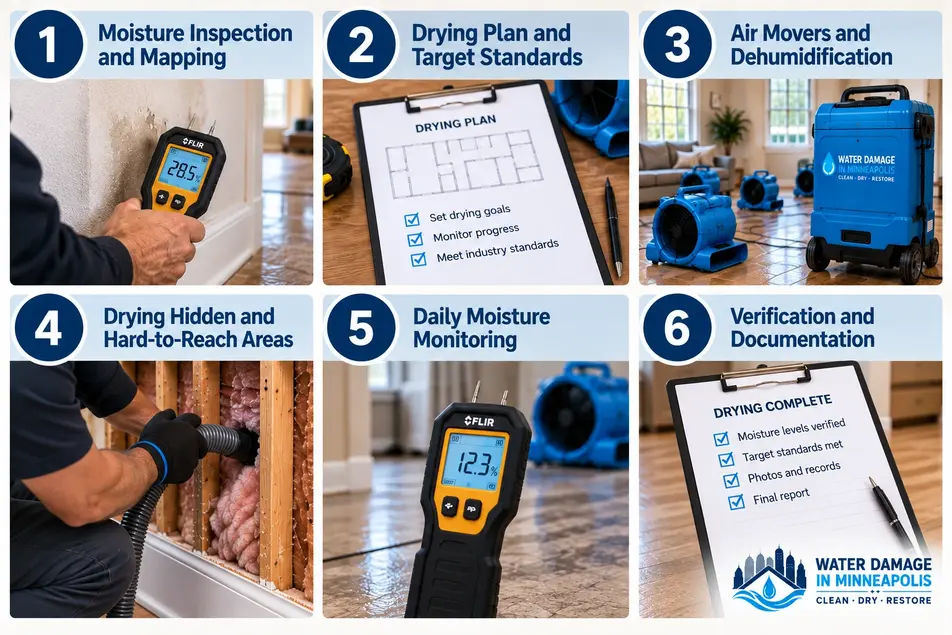
Step 1. Moisture Inspection and Mapping
We start by finding all the moisture, including what’s hidden. Using moisture meters and infrared cameras, we map water in walls, ceilings, subfloors, and cavities a complete picture of what needs to be dried. You can’t dry what you haven’t found.
Step 2. Drying Plan and Target Standards
From the moisture map, we build a drying plan: where the water is concentrated, where to place equipment, and the target dry standard for each material. Wood, drywall, and concrete each dry differently and have different safe moisture levels, so the plan is specific to your property.
Step 3. Air Movers and Dehumidification
We position commercial-grade air movers to speed evaporation while dehumidifiers pull that moisture out of the air before it resettles. The two work as a system one without the other doesn’t get a structure dry. The equipment often runs continuously for several days, depending on saturation.
Step 4. Drying Hidden and Hard-to-Reach Areas
Some moisture hides where standard airflow can’t reach inside wall cavities, under cabinets, beneath hardwood. For these, we use targeted methods like injecting warm, dry air directly into wall cavities, so the structure dries from the inside, not just the surface.
Step 5. Daily Moisture Monitoring
This is what separates real drying from guesswork. Each day we take fresh readings, compare them against the target dry standard, and adjust equipment based on the data drying until the numbers confirm the structure is genuinely dry.
Step 6. Verification and Documentation
Our emergency water removal process is complete once all affected materials meet verified dry standards. We document the final moisture readings alongside the daily drying logs, providing clear proof for you and the records your insurance company expects to see.
Call +1 (507) 410-9911
Start Your Structural Drying
Structural Drying Is the Best Mold Prevention
Thorough drying isn’t just about saving materials it’s the single most effective way to prevent mold after water damage.
Mold needs three things: moisture, a food source, and time. After water damage, the food source drywall, wood, insulation is already there, and mold can begin developing within 24 to 48 hours. The one factor you can control is moisture. Remove it completely, and mold has nothing to grow on.
This is why a surface that feels dry isn’t enough. A wall can still hold enough hidden moisture to support mold growth behind the paint for weeks. Drying to verified standards confirmed by moisture readings rather than touch eliminates the damp conditions mold needs. If growth has already developed, our in-house mold remediation team can address the moisture and mold in one coordinated job.
Why Minneapolis Trusts Water Damage in Minneapolis for Structural Drying
Drying is where experience and equipment separate a full recovery from lingering problems. Here’s why Minneapolis property owners trust us with it.
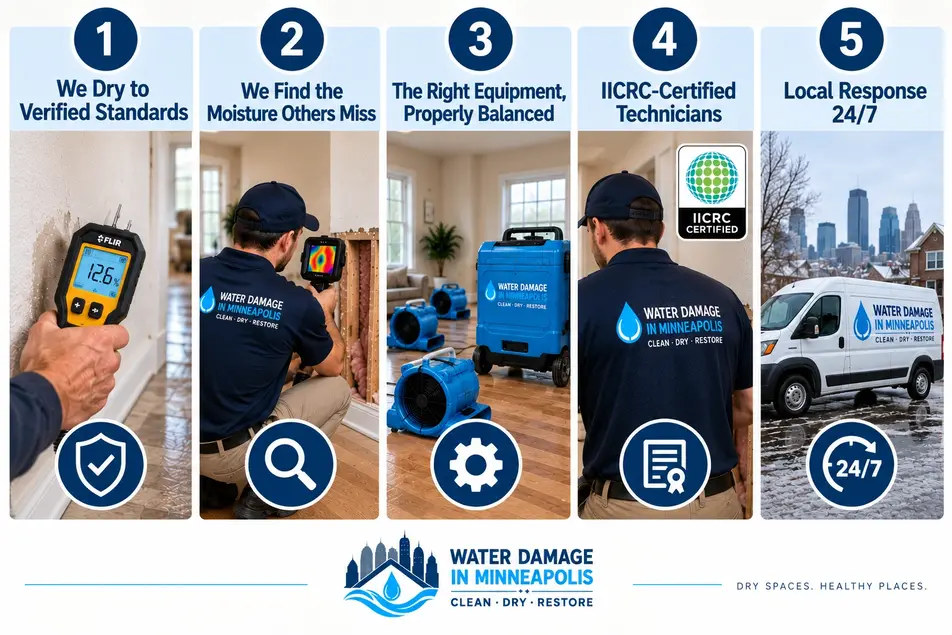
1. We Dry to Verified Standards
We don’t call a job done because a surface feels dry. We measure moisture daily against material specific standards, keep drying until the readings confirm it, and document it. You get proof your property is genuinely dry not just a promise.
2. We Find the Moisture Others Miss
Using moisture meters and infrared cameras, we locate hidden water in walls, subfloors, and cavities. The moisture left behind is what causes warping and mold later and finding it is what separates thorough drying from a rushed job.
3. The Right Equipment, Properly Balanced
Proper drying isn’t possible with household fans. We use commercial-grade air movers, dehumidifiers, and specialized equipment, balancing airflow, humidity, and temperature to dry the structure properly. Once verified drying is complete, our repairs and reconstruction team restores any materials that could not be saved.
4. IICRC-Certified Technicians
Our team is IICRC-certified the recognized industry standard for restoration and drying. We follow established protocols for moisture detection, drying methods, and verification, the same standards your insurance company expects on a covered claim.
5. Local Response 24/7
We’re based right here in the Twin Cities not a national call center and available 24/7 with a 60-minute average response time. The faster drying begins after water damage, the less damage there is to undo.
Why homeowners choose us for structural drying
✅Drying to verified, documented dry standards
✅ Hidden-moisture detection with meters and infrared
✅ Commercial-grade equipment, properly balanced
✅ IICRC-certified technicians
✅ 24/7 response, 60-minute average arrival
✅ Full insurance documentation on every job
+1 (507) 410-9911
Call For Structural Drying in Minneapolis
Get Structural Drying in Minneapolis
The difference between a property that recovers fully and one with lingering damage usually comes down to how completely it was dried. Don’t settle for surface-dry.
Water Damage in Minneapolis is a local, IICRC-certified team providing professional structural drying 24/7. We find the moisture you can’t see and dry your property to verified standards with the documentation to prove it.